

In my last post on Chitvan Jungle Lodge, located at Kanha in Madhya Pradesh, India, I promised you to share the tribal village technique of keeping vegetables fresh for days together without a refrigerator. Today I am going to throw some light on how it is being done through the photos I clicked. My old followers already know about the serenity of Chitvan, the new friends who have missed the previous post, can click here to have a detailed information about this one of the finest hotels amidst thick green forests and adjoining the core forest area of picturesque tiger forests of Kanha of India.Â
The world seems to be going green. People love to spend holidays in natural surroundings where the children and the families can have first hand experience of rural life. One such experience I had during my stay in Chitvan. This was a moment in time.
We reached there in the afternoon, had lunch, went to room, freshen up to take a view of property. As soon as we reached the organic farm we were delighted to see so many herbs and medicinal plants,a  panacea for many diseases. In one corner we saw these amazing pots, (invented by Nigerian teacher, Mohammed Bah Abba, being used by local villagers) to keep their vegetables fresh for weeks  just like any other electric refrigerator.
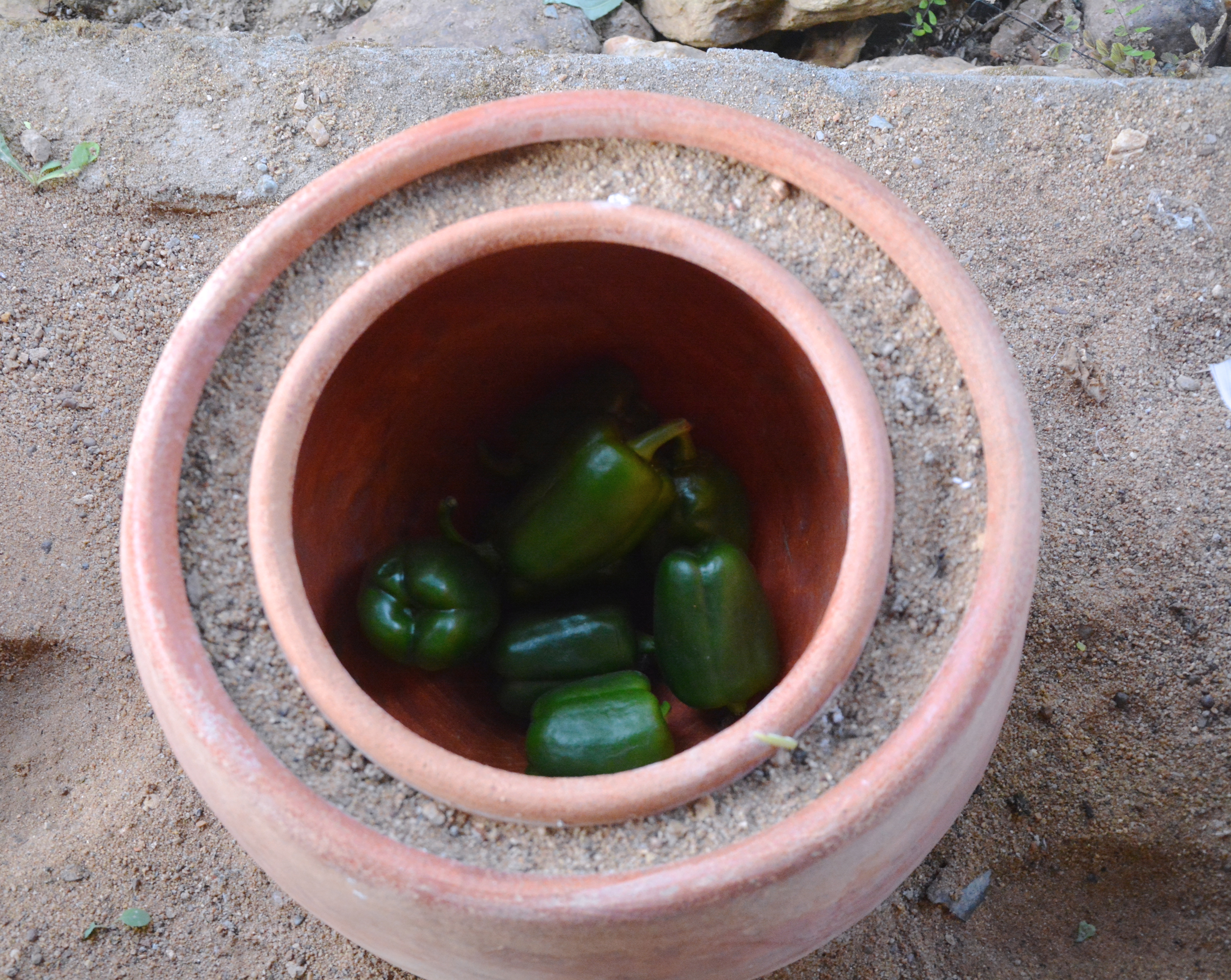
History of Jeer Pots:
There is some evidence that evaporative cooling was used as early as the Old Kingdom of Egypt, around 2500 B.C. Frescos show slaves fanning water jars, which would increase air flow around the porous jars and aid evaporation, cooling the contents. Later with the invention of modern electric refrigerators this technology was probably forgotten, tribals from different countries continued to rely on these pots for preserving food.
This history was placed near the pots for Chitvan tourists who are keen to know more about it.

How to make your own Zeer Pots:
Firstly place a large clay pot which fits in another larger clay pot with a lid.
Fill the space between the two pots with sand, creating an insulating layer around the inner pot.
Now keep the sand damp by adding water at regular intervals generally twice a day. It reduces the temperature within the inner pot.
If lid is not available then put wet cloth on top.
Hey the pot is ready to place vegetables in it. Each zeer can contain 12 kg of vegetables.
Cost:
Less than US$2/ approx Rs.160 to produce. As the water evaporates the device gets cool to allow refrigeration in hot, dry climate.
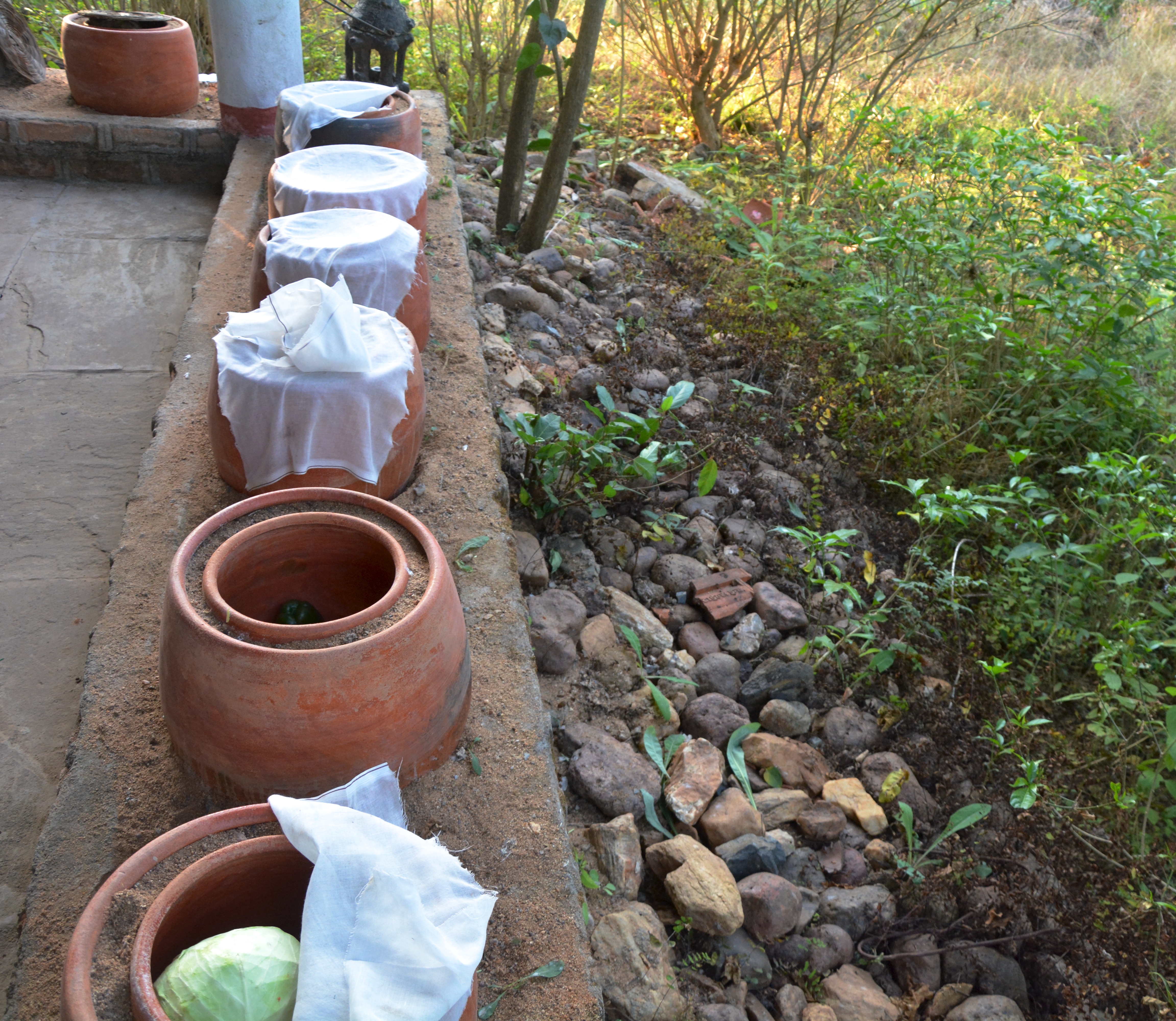
Do’s & Don’ts
You can glaze the inner pot to prevent the penetration by the liquid.
Preferably place it in a dry, ventilated space for the water to evaporate effectively towards the outside.
It is not effective, performs poorly in areas having high humidity since the water is not able to evaporate well under these conditions.
Do not over stuff the inner pot.

Benefits;
It helps maintain the vitamin and nutrient content of the vegetables, and prevent disease by keeping flies off the food.
It can be used for storing life saving drugs where electricity is not available twenty four hours.
 It protects farm fresh from humidity, keeps it dry, preventing fungi from developing.”
It is non-pollutant and eco friendly, ideal for organic world. A boon for farmers.
I hope you have enjoyed the information about Zeer pots and it will benefit you in some way. I am looking for the pots and will try to make one. If you have had any similar experience or information please share it.Â