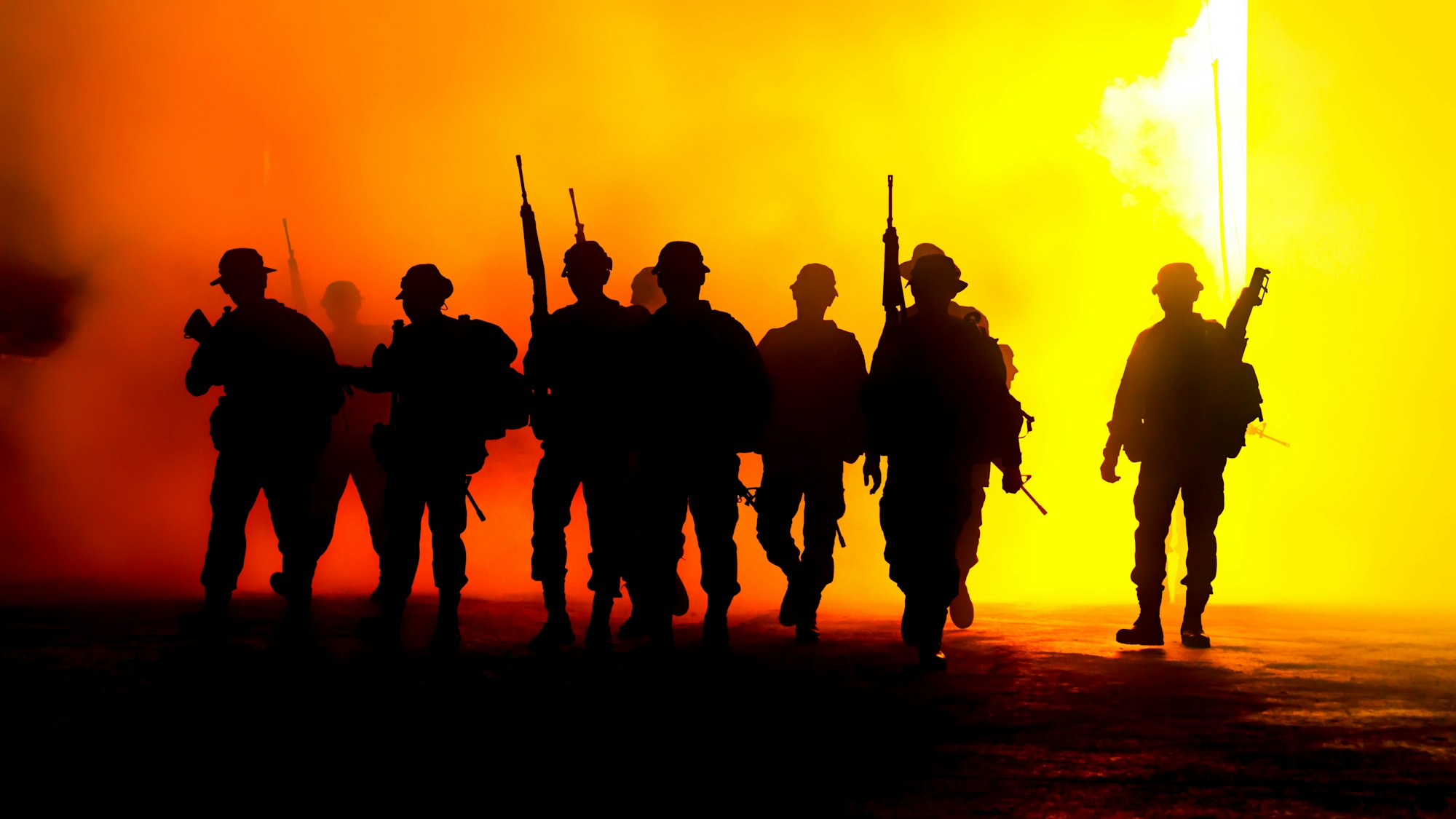
In the military, inner strength is not just a virtue—it’s a necessity. The steel spine holds us upright in the face of adversity. As a spouse of a veteran army officer.
I’ve learned that the same principles that fortify soldiers on the battlefield can empower anyone in the daily battles of life. There are occasions when spouses accompany forward locations where battles fought by soldiers are recreated to drive home the valor and courage displayed against formidable opponents. The unyielding mental makeup of army soldiers is borne out of the concept of Naam, Namak, and Nishan, which signify the unit’s name, obedience to the motherland, and supreme sacrifice under the flag. I was fortunate to accompany my husband to witness the recreation of The Battle of Saragarhi as a young bride, and the imprints of the lessons still linger.
The Battle of Saragarhi was a last-stand battle between the Sikh soldiers during British rule and Afghan tribesmen. On September 12th, 1897, an estimated 12,000 – 24,000 Afgan tribesmen were seen near an incident that took place around Saragarhi, which resulted in the isolation of Fort Gulistan from Fort Lockhart. The Afghan forces launched an attack on the outpost of Saragarhi, where they surrounded the Fort with thousands of troops, preparing to invade it. However, the 21 soldiers stationed in the Fort, who were all Sikhs and led by Havildar Ishar Singh, refused to surrender and fought till the end. Sadly, they were all killed in the battle. The post was later recaptured by another British Indian contingent two days after the incident.
The historical account of the Battle of Saragarhi is precise because Sepoy Gurmukh Singh could transmit real-time updates to Fort Lockhart using a heliograph. Around 9 a.m., about 6,000 to 10,000 Afghans approached the signal station at Saragarhi. Sepoy Gurmukh Singh alerted Colonel Haughton at Fort.
Lockhart of the imminent attack. Colonel Haughton indicated that he was unable to dispatch immediate reinforcements to Saragarhi. The Saragarhi defenders resolved to hold their ground to the end to block the adversaries from advancing to the forts.
The first casualty was Sepoy Bhagwan Singh, and Naik Lal Singh sustained grave injuries. It is said that Naik Lal Singh and Sepoy Jiwa Singh moved Bhagwan Singh’s body to the post’s inner sanctum. A segment of the picket wall was demolished by the Afghans. In his signaled assessment, Colonel Haughton mentioned that the attacking Pashtun force numbered 10,000 and 14,000. Pashtun leaders purportedly offered terms to the Saragarhi soldiers in hopes of convincing them to surrender. Despite two forceful efforts to storm the gate, the attackers failed.
Subsequently, the wall was breached, leading to intense close-quarters combat. Havildar Ishar Singh commanded his troops to retreat to the inner defenses while he stayed behind to cover their withdrawal. Following the breach of the inner defenses, all but one defender perished, along with numerous Pashtuns.
The last man standing was Sepoy Gurmukh Singh, the signalman relaying the battle’s progress. His final act was to request authorization to engage in combat. After getting the go-ahead, he dismantled the heliograph and defended the entrance to his signal booth.
He is credited with eliminating 40 Afghans, compelling the Pashtuns to set the post ablaze to defeat him. As he faced his end, Singh is reported to have chanted the Sikh war crying
“Bole So Nihal, Sat Sri Akal!” proclaiming, “One will be blessed eternally, who says that God is the ultimate truth!”.
Everyone in the audience had tears and goosebumps when hearing the saga of the supreme sacrifice. It brought out that strength as we know it does not come from physical capacity. It comes from an indomitable will. Look well into your inner sanctum; a source of strength will always spring up whenever called for.
Let me share five steps to build a fortress of inner strength for those who are grappling with challenges on personal or professional fronts
Step 1: Embrace Discipline
Discipline is the bedrock of military life. It’s about doing what needs to be done, even when you don’t feel like it. Start small: make your bed every morning, exercise regularly, and set a daily routine. These acts of discipline will train your willpower and prepare you for more significant challenges.
Step 2: Cultivate Resilience
Resilience is the ability to bounce back from setbacks. In the army, we learn to see failure not as a defeat but as a lesson. Build resilience by setting challenging but achievable goals. When you stumble, analyze what went wrong, adjust your plan, and try again with renewed vigor.
Step 3: Develop Adaptability
Change is the only constant in military operations. Adaptability is about adjusting your strategy when circumstances shift. Practice this by stepping out of your comfort zone. Take a different route to work, learn a new skill, or travel to unfamiliar places. Flexibility in thought and action is a hallmark of inner strength.
Step 4: Foster Courage
Courage in the military isn’t the absence of fear; it’s the determination to face it. To build courage, start confronting the more minor concerns in your life. Speak up in meetings, try new activities, or stand up for your beliefs. Each act of bravery paves the way for greater ones.
Step 5: Reflect Regularly
Reflection is a daily ritual in the military. It’s a time to review actions, assess tactics, and plan for the future. Incorporate reflection into your life by keeping a journal. Write down your experiences, emotions, and the lessons they teach. Reflection turns experience into wisdom.
Now, coming back to The Battle of Saragarhi, which holds significant historical importance for several reasons
Military Valor
It is celebrated as an extraordinary example of bravery in the face of overwhelming odds. The 21 Sikh soldiers of the 36th Sikhs regiment chose to fight to the death rather than surrender despite being vastly outnumbered by the Afghan forces 12.
Strategic Communication
Saragarhi was a crucial communication post between Fort Lockhart and Fort Gulistan. Its loss meant a break in the communication link, which was vital for the British to maintain control over the volatile North-West Frontier Province.
Legacy and Commemoration
The battle has left a lasting legacy, inspiring numerous creative works, documentaries, and military studies. It is commemorated annually on September 12th by the Indian Army’s 4th Battalion of the Sikh Regiment as Saragarhi Day 2.
Gallantry Awards
All 21 soldiers involved were posthumously awarded the Indian Order of Merit, the highest gallantry award an Indian soldier could receive at the time 2. The battle exemplifies military courage and the spirit of sacrifice and loyalty, qualities that continue to inspire soldiers and civilians alike.
Remember, Inner strength is not innate but a skill honed through persistent effort. You can build the inner fortitude that defines the world’s most elite military forces by embracing discipline, cultivating resilience, developing adaptability, fostering courage, and reflecting regularly. Start today, and step by step, transform into the most robust version of yourself. Do you have it in YOU!!!